

Expert guide
For most of their history, security cameras did one thing: record footage that someone would review after an incident. The footage was evidence – valuable after the fact, but invisible in real time. The transition to AI-powered surveillance changes this fundamentally. Modern cloud VMS platforms with integrated AI analytics don’t just record what happens – they analyze it, alert on it, and provide operational data that has value far beyond security.
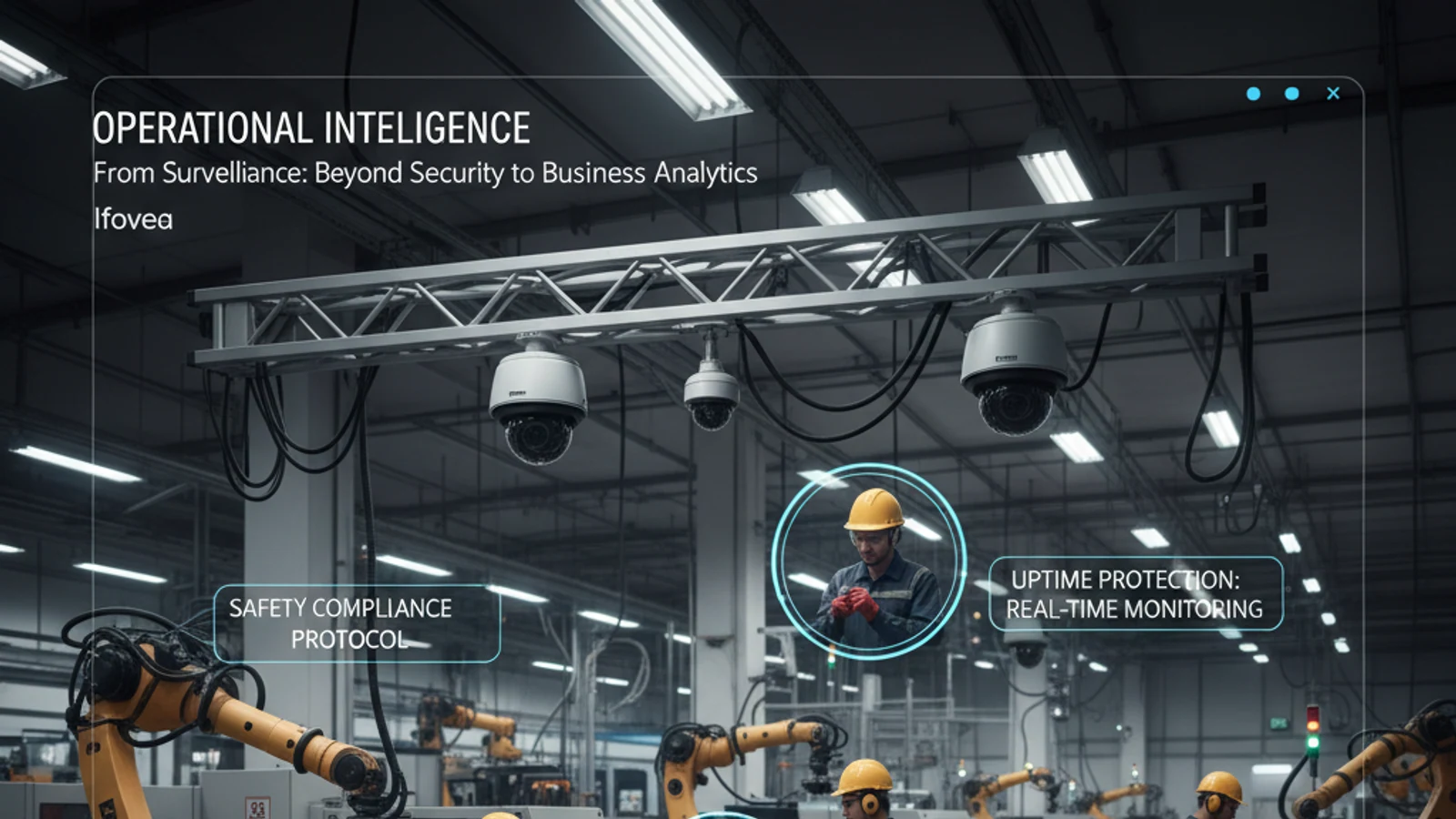
For most of their history, security cameras did one thing: record footage that someone would review after an incident. The footage was evidence – valuable after the fact, but invisible in real time. The transition to AI-powered surveillance changes this fundamentally. Modern cloud VMS platforms with integrated AI analytics don’t just record what happens – they analyze it, alert on it, and provide operational data that has value far beyond security.
- From Passive Recording to Active Operational Intelligence
- What “Operational Intelligence” Means in Practice
- Ifovea’s Operational Intelligence Capabilities
- The ROI of Operational Intelligence
- Building the Operational Intelligence Case Internally
- Frequently Asked Questions
- Request an Operational Intelligence Assessment
Cloud-first access
Centralize live view, playback, user permissions, and investigation workflows.
AI analytics built in
Use smarter search and event detection to reduce manual review time.
Camera flexibility
Deploy with supported existing cameras and avoid unnecessary rip-and-replace projects.
From Passive Recording to Active Operational Intelligence
Ifovea positions itself explicitly as an operational intelligence platform, not simply a camera management system. The distinction matters for how organizations think about ROI, how they justify investment, and how they leverage the infrastructure they’re already deploying for security purposes.
What “Operational Intelligence” Means in Practice
Operational intelligence from surveillance infrastructure refers to actionable business insights derived from video analytics – insights that go beyond security use cases to inform operational decisions:
- Foot traffic analysis – Understanding when, where, and how customers or employees move through physical spaces
- Occupancy management – Real-time and historical occupancy data for space planning and compliance
- Queue and wait time analysis – Identifying service bottlenecks at checkout, drive-through, or service counters
- Space utilization – Which areas of a facility are used heavily, which are underutilized, and when
- Safety compliance monitoring – Automated detection of PPE violations, unsafe behaviors, or restricted zone intrusions
- Asset and equipment tracking – Understanding how equipment and vehicles move through operational environments
These insights come from the same camera infrastructure deployed for security. The AI analytics layer extracts operational value that was previously invisible – not from additional sensors or data systems, but from existing surveillance investment.
Turn this into a practical surveillance plan
iFovea can review your camera fleet, sites, bandwidth, AI analytics needs, and migration path.
Ifovea’s Operational Intelligence Capabilities
People Counting and Foot Traffic Analytics
Accurate, real-time people counting across entry points, departments, zones, or entire facilities. Historical trend data shows traffic patterns by hour, day, week, and season. Use cases include staffing optimization (schedule staff based on actual traffic patterns), marketing effectiveness analysis (did the promotion drive traffic?), and compliance management (maximum occupancy monitoring).
Heat Maps and Dwell Time Analysis
Visual representations of where people spend time within a physical space, and how long they dwell in specific areas. Retail merchandising teams use heat maps to optimize product placement. Commercial real estate managers use dwell data to understand how tenants use common areas. Workplace designers use occupancy patterns to right-size facilities and optimize floor plans.
Queue Analytics and Service Optimization
AI-powered queue detection identifies when lines form at checkout counters, service windows, or other service points – and measures wait times in real time. Alerts trigger when wait times exceed defined thresholds, enabling dynamic staffing responses before customers become frustrated. Historical queue data identifies patterns that drive scheduling decisions.
Vehicle and Asset Tracking
License plate recognition combined with zone detection creates vehicle flow analytics – understanding how vehicles move through a facility, how long they spend in specific areas, and when they arrive and depart. Relevant for logistics operations, dealership lot management, parking facility optimization, and campus access management.
Safety and Compliance Monitoring
Automated PPE detection identifies workers in designated zones who are not wearing required safety equipment. Restricted zone alerts trigger when unauthorized personnel enter hazardous areas. These capabilities deliver continuous safety monitoring at a scale and consistency that human safety officers cannot match – reducing incident rates, improving OSHA compliance documentation, and reducing workers’ compensation exposure.
AI Forensic Search for Operational Review
Beyond security incidents, AI forensic search enables operational review: find footage of a specific operational activity, review a specific process execution, or document a specific event for training or compliance purposes. The same forensic search capability that accelerates security investigations accelerates operational documentation and review.
The ROI of Operational Intelligence
Security teams traditionally justify surveillance investment purely on security ROI: prevented theft, faster incident resolution, liability claim defense. Operational intelligence adds a second ROI stream that often exceeds the security ROI in absolute dollar terms:
- Retail: 2-5% revenue improvement from better product placement informed by heat map data; 10-20% labor cost optimization from traffic-informed scheduling
- Warehousing: Throughput improvements from equipment flow analysis; injury cost reduction from safety compliance monitoring
- Healthcare: Capacity optimization from occupancy analytics; compliance documentation value from safety monitoring
- Hospitality: Staffing efficiency from foot traffic analytics; customer experience improvements from wait time monitoring
When operational teams see these use cases, surveillance infrastructure investment becomes a business intelligence investment – a different budget conversation with a broader range of stakeholders.
Building the Operational Intelligence Case Internally
The most effective way to build internal support for AI surveillance investment is to identify two or three specific operational use cases relevant to your organization’s current pain points – then quantify what addressing those pain points is worth.
Questions worth asking:
- How much does suboptimal staffing at peak periods cost us in lost sales or customer experience?
- What is our current PPE compliance rate, and what would a 10% improvement in incident prevention save?
- How many hours does our security team spend manually reviewing footage after incidents?
- What are our average workers’ compensation claim costs per year?
- How much revenue is associated with the product placement decisions we’re currently making without traffic data?
These questions frame the ROI of Ifovea’s operational intelligence platform in terms that resonate with finance, operations, and HR leadership – not just security teams.
Frequently Asked Questions
Is operational intelligence from surveillance appropriate to use in employee-facing environments?
Yes, with appropriate transparency and governance. Employee monitoring via workplace surveillance is legal in most US states with appropriate notice and disclosure. The specific scope of monitoring should be aligned with HR policies, employee agreements, and applicable state and local law. Consult your legal counsel for requirements specific to your jurisdiction and industry.
Does operational intelligence require additional cameras beyond security requirements?
In many cases, no. Cameras deployed for security coverage – particularly in retail, hospitality, and commercial environments – often provide the coverage angles needed for people counting, heat maps, and queue analytics. Additional cameras may be needed for specific operational use cases where security camera angles aren’t optimal for analytics purposes.
How is operational intelligence data stored and accessed?
Analytics data (aggregated counts, heat map data, queue metrics) is stored in Ifovea’s cloud platform and accessible through dashboards and reports. Raw video footage underlying the analytics is retained according to your configured retention policy. Aggregated analytics data may be retained longer than raw video, enabling trend analysis over extended time periods.
Can operational intelligence data be exported to other business systems?
Ifovea’s API allows analytics data to be exported to third-party business intelligence, dashboard, and reporting systems. Specific integration capabilities depend on your target system’s API. Contact Ifovea’s team for your specific integration requirements.
Request an Operational Intelligence Assessment
Ifovea’s team works with organizations to identify the specific operational intelligence use cases most relevant to their industry, facility type, and operational challenges – and design deployments that deliver security and operational ROI from the same infrastructure investment.
Frequently asked questions
Who is Operational Intelligence From Surveillance: Beyond Security to Business Analytics | Ifovea most relevant for?
It is most relevant for organizations evaluating cloud VMS, AI analytics, camera compatibility, or migration away from legacy surveillance systems.
Does iFovea support existing cameras?
iFovea is designed to support many existing IP camera deployments through compatible camera and ONVIF workflows.
How does AI search help investigations?
AI search reduces manual review by helping teams find people, vehicles, objects, colors, areas, and events faster than timeline scrubbing alone.
What should I do next?
Request a demo or assessment so iFovea can map the topic to your camera fleet, sites, bandwidth, and retention requirements.
Related resources
Continue comparing options, planning migration, and estimating the right cloud surveillance architecture.
Ready to plan the next step?
iFovea can review your camera fleet, sites, bandwidth, AI analytics needs, and migration path.