

Eagle Eye Networks Alternative for Integrators and Multi-Site Operations
Eagle Eye is a strong integrator platform. iFovea is the stronger fit when you need 10 AI analytics types included, deeper camera-brand compatibility, white-label branding, or a more transparent per-camera pricing model.
Direct Answer
What is the best Eagle Eye Networks alternative?
iFovea is an Eagle Eye Networks alternative built for integrators and multi-location businesses. Eagle Eye is strong for integrators but has per-camera AI analytics fees. iFovea includes all 10 AI analytics in every subscription at a single per-camera rate.
- ✓All AI analytics included — ALPR, AI search, people counting — no add-on fees
- ✓White-label and integrator program available for security dealers
- ✓ONVIF camera support — no proprietary hardware required
Eagle Eye Networks vs. iFovea: Head-to-Head
| Feature / Factor | Eagle Eye Networks | iFovea |
|---|---|---|
| Cloud VMS platform | ✓ | ✓ |
| ONVIF camera support | ✓ | ✓ |
| Multi-site management | ✓ | ✓ |
| Integrator reseller program | ✓ | ✓ |
| White-label VMS branding | Partial | Full (domain + app) |
| AI analytics types included | Basic (motion clips, object tags) | 10 types, all included |
| People & vehicle counting | Add-on | Included |
| License plate recognition (ALPR) | Add-on | Included |
| AI forensic video search | Limited | Full forensic search |
| Proprietary hardware required | Bridge device required for some | No (BYOC) |
| Face recognition | Not standard | Included |
| Hybrid cloud / edge support | ✓ | ✓ |
Comparison based on publicly available information as of 2026. Contact both vendors to confirm current offerings.
Why Integrators Evaluate Eagle Eye Alternatives
Eagle Eye Networks is a capable platform, but integrators frequently evaluate alternatives when one or more of these factors apply:
AI Analytics Depth
Eagle Eye’s analytics are primarily motion-clip based with basic object tagging. Integrators with clients in retail, warehousing, or healthcare need people counting, ALPR, heat maps, and face recognition — all of which require add-ons or are unavailable.
White-Label Branding Depth
Eagle Eye offers a reseller program, but integrators who want fully branded portals, custom domains, and client-facing mobile apps under their own brand find the options limited compared to a full white-label VMS platform.
Camera Flexibility
Eagle Eye supports many ONVIF cameras but requires their bridge device for some configurations. Integrators whose clients have large installed camera bases prefer platforms that connect existing cameras directly, without additional hardware.
Pricing Transparency at Scale
Eagle Eye pricing can become expensive for integrators managing hundreds of cameras across dozens of client sites. Integrators running margin-sensitive recurring revenue models need a per-camera subscription that scales predictably.
How iFovea Addresses These Gaps
10 AI Analytics Types — All Included
Every iFovea subscription includes the full AI analytics suite: object detection, people counting, vehicle counting, face recognition, AI forensic video search, license plate recognition (ALPR), heat maps, behavioral pattern detection, perimeter alerts, and PPE/safety compliance detection. None are sold as add-ons. Integrators can deliver AI-powered security outcomes to every client at no incremental analytics cost.
Full White-Label VMS Program
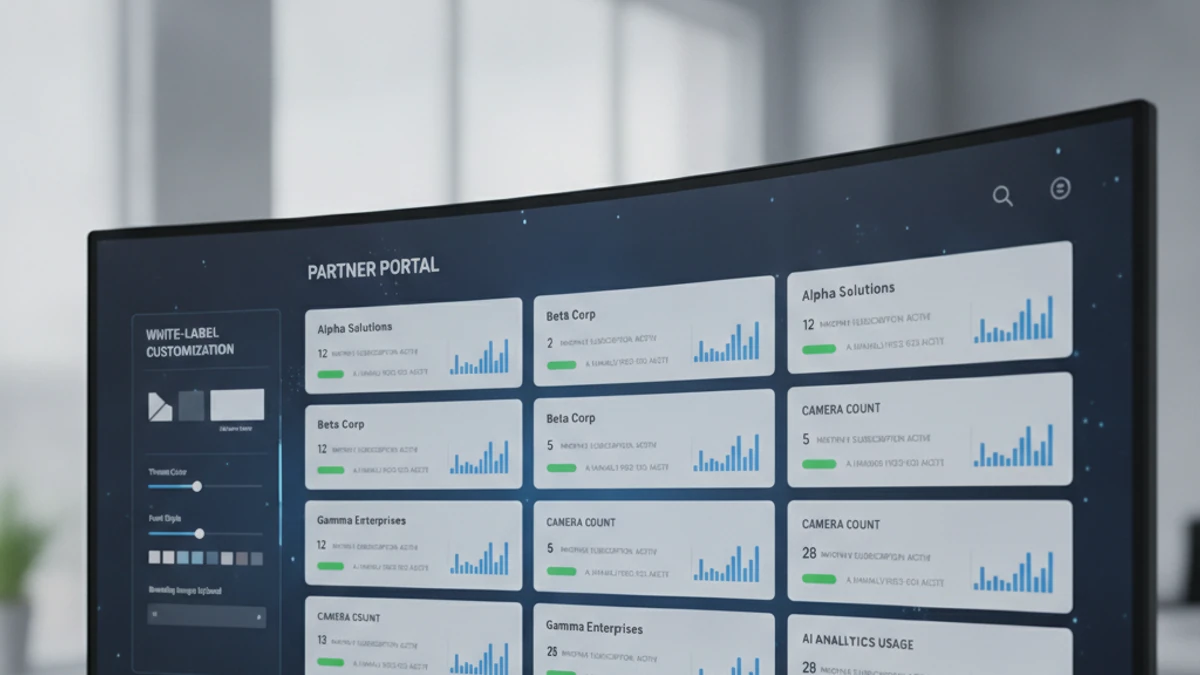
iFovea’s white-label program gives integrators a custom domain, a fully branded iOS and Android mobile app, a multi-tenant admin portal with full hierarchy control, and co-marketing support. End clients see only the integrator’s brand — not iFovea. This is a recurring-revenue model: integrators subscribe to iFovea wholesale and mark up the subscription to clients. See white-label VMS details.
Camera-Agnostic Architecture
iFovea connects to any ONVIF-compatible IP camera without requiring a proprietary bridge device in most configurations. Integrators can onboard client sites with existing Hikvision, Axis, Uniview, Milesight, Vivotek, and other ONVIF cameras — reducing hardware replacement costs that can stall sales cycles. See camera compatibility guide.
Per-Camera Subscription Pricing
iFovea is priced per camera per month, which scales linearly as integrators add client sites and cameras. Integrators can model their margin at any scale without opaque enterprise negotiations. Request a partner pricing quote.
When Eagle Eye Networks May Still Be the Right Choice
iFovea is not the right fit for every scenario. Eagle Eye Networks may be the better choice when:
- Your clients are primarily in verticals where Eagle Eye has deep integrations (retail chains, banking)
- You need a specific third-party integration that Eagle Eye supports but iFovea does not yet offer
- Your clients require physical security platform integrations (access control, intrusion) that Eagle Eye partners provide
- You have an existing Eagle Eye reseller agreement with territory protection or co-sell commitments
Being honest about fit builds integrator trust. iFovea performs best for integrators who prioritize AI analytics depth, full white-label branding, existing-camera reuse, and transparent per-camera pricing.
Frequently Asked Questions
What is Eagle Eye Networks and who is it for?
Eagle Eye Networks is a cloud VMS platform primarily targeting security integrators and multi-site enterprise businesses. It offers a cloud-managed video surveillance subscription with a strong integrator reseller program. It is best suited for integrators managing large client portfolios who want a cloud-hosted VMS they can resell.
Why do businesses look for Eagle Eye Networks alternatives?
Common reasons include pricing concerns (Eagle Eye can become expensive at scale), desire for AI analytics beyond basic motion clips, preference for open-architecture camera support, and need for white-label branding capabilities. Some integrators also evaluate alternatives when client camera inventories are already installed and replacement would add cost.
Does iFovea work with existing cameras like Eagle Eye does?
Yes. Both platforms support ONVIF-compatible IP cameras. iFovea emphasizes camera reuse as a core differentiator — it is designed to connect existing cameras from Hikvision, Axis, Uniview, Milesight, and other ONVIF brands without requiring hardware replacement. See iFovea’s full camera compatibility guide for details.
How does iFovea AI analytics compare to Eagle Eye?
Eagle Eye offers motion-based clips and basic object detection. iFovea includes 10 AI analytics types in every subscription: object detection, people counting, vehicle counting, face recognition, AI video search, license plate recognition (ALPR), heat maps, behavioral pattern detection, perimeter alerts, and PPE/safety compliance detection. None are sold as add-ons.
Does iFovea offer a white-label program like Eagle Eye?
Yes. iFovea offers a full white-label VMS program for integrators: custom domain, branded iOS and Android app, multi-tenant portal, and admin hierarchy. Eagle Eye also offers an integrator reseller program, but iFovea’s white-label option provides deeper branding customization.
How long does migration from Eagle Eye to iFovea take?
Migration timelines vary by site count and camera inventory. For single-site deployments with compatible ONVIF cameras, migration can often be completed in one day. Multi-site enterprise migrations are typically phased over several weeks. iFovea provides a free migration assessment to plan the transition.
Compare iFovea to Eagle Eye Networks Directly
Get a side-by-side assessment based on your current setup — cameras, sites, and analytics requirements.