

Cloud VMS comparison
Evaluating cloud video management systems means cutting through vendor claims to understand what each platform actually delivers for your specific operational requirements. Ifovea’s open architecture – working with any ONVIF-compliant camera without proprietary hardware lock-in – makes it a fundamentally different kind of platform from most cloud VMS alternatives.
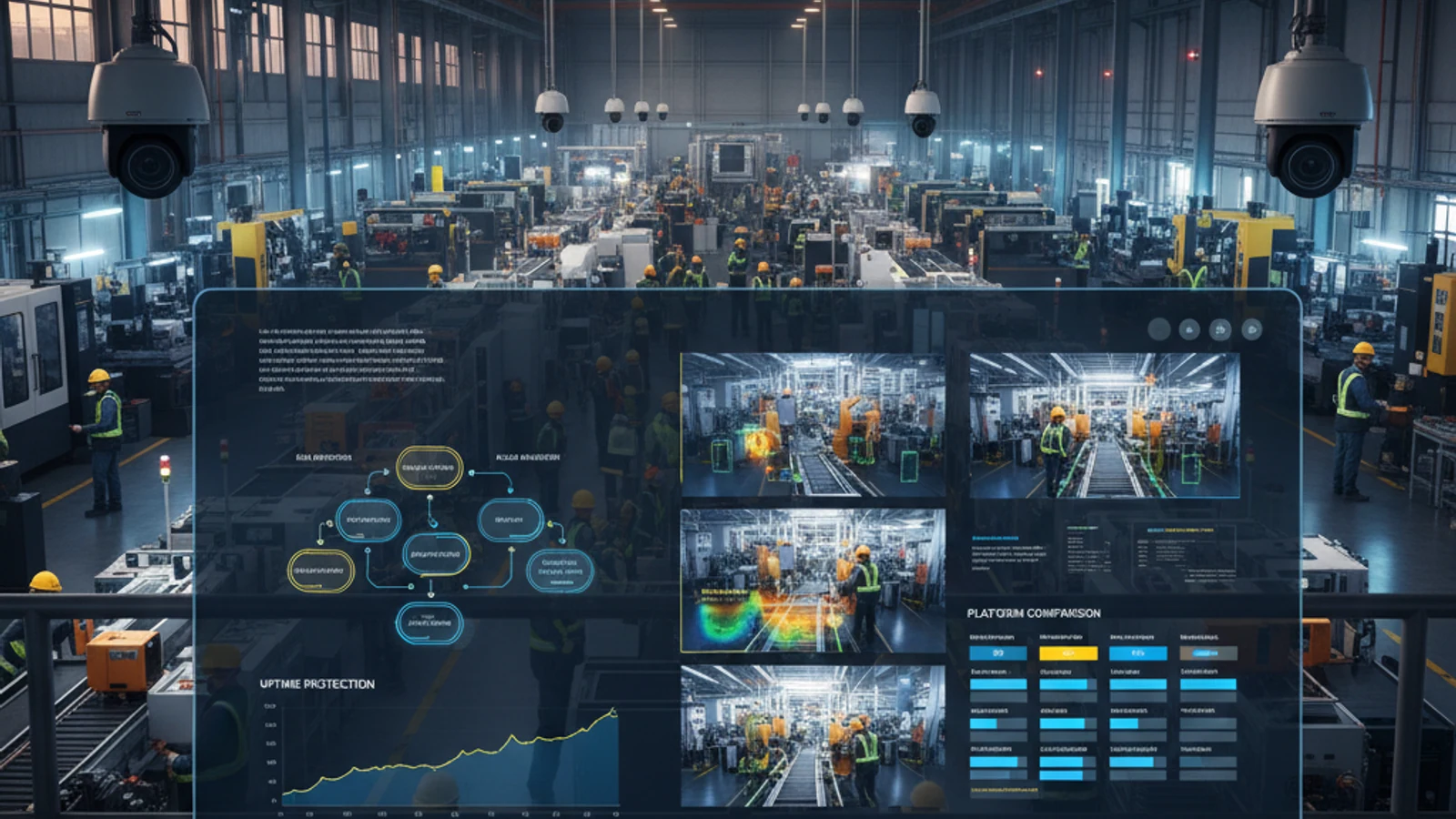
Evaluating cloud video management systems means cutting through vendor claims to understand what each platform actually delivers for your specific operational requirements. Ifovea’s open architecture – working with any ONVIF-compliant camera without proprietary hardware lock-in – makes it a fundamentally different kind of platform from most cloud VMS alternatives.
No hardware lock-in
Keep compatible ONVIF and supported IP cameras instead of replacing working hardware.
Hybrid cloud resilience
Use cloud access with local recording continuity where uptime and bandwidth matter.
Lower migration risk
Phase the rollout by site, validate camera compatibility, and avoid all-at-once replacement.
Compare iFovea to Leading Cloud Surveillance Platforms
Use these side-by-side comparison pages to evaluate Ifovea against the specific platforms you’re currently using or considering.
Ifovea vs. Leading Cloud Surveillance Platforms
- iFovea vs. Verkada – Full feature comparison, pricing transparency analysis, and migration advantages
- Verkada Alternative – Why organizations are leaving Verkada and what they’re moving to
- Rhombus Alternative – Cloud surveillance without proprietary hardware lock-in
- Eagle Eye Networks Alternative – Open architecture vs. the Eagle Eye ecosystem
- Avigilon Alta Alternative – Enterprise AI surveillance without Motorola ecosystem dependency
- Genetec Alternative – Cloud-first VMS without on-premises server complexity
- Cisco Meraki MV Alternative – AI surveillance without Cisco network lock-in
- OpenEye Alternative – Deeper AI analytics for multi-site operations
- Arcules Alternative – Full hybrid resilience and white-label VSaaS
- Milestone XProtect Alternative – Cloud-native VMS without on-premises VMS complexity
- iFovea vs. Coram AI – AI-first BYOC platforms compared on architecture, pricing transparency, and partner programs
New: Multi-Platform Comparisons
See how iFovea stacks up when placed directly alongside two other platforms at once – useful if you’re evaluating more than one alternative.
- Verkada vs. Eagle Eye Networks vs. iFovea – Hardware requirements, pricing, AI analytics, and partner programs compared
- Verkada vs. Rhombus vs. iFovea – Proprietary camera bundles vs. iFovea’s BYOC, hybrid, white-label approach
- Eagle Eye Networks vs. Genetec vs. iFovea – Hybrid cloud VMS vs. enterprise open-architecture VMS vs. iFovea
Turn this into a practical surveillance plan
iFovea can review your camera fleet, sites, bandwidth, AI analytics needs, and migration path.
What to Look for When Comparing Cloud VMS Platforms
Hardware Flexibility
Does the platform require proprietary cameras, or does it work with any ONVIF-compliant camera from any manufacturer✓ Proprietary hardware creates permanent cost and vendor lock-in that compounds with every expansion. Ifovea works with cameras from Axis, Hanwha, Hikvision, Dahua, Uniview, Milesight, and any other ONVIF camera you already own.
Hybrid Architecture
Can the platform record locally during internet outages✓ Pure cloud-only systems lose recording capability when the WAN link goes down. Ifovea’s hybrid architecture records to local edge storage continuously, syncing to the cloud when connectivity is available.
AI Analytics Depth
Does the platform offer genuine forensic AI search across all cameras simultaneously✓ Or just motion detection with basic object classification✓ Ifovea’s AI forensic search, ALPR, people counting, behavioral analytics, fire/smoke detection, and PPE compliance monitoring are integrated into the platform – not sold as separate modules.
Multi-Site Management
Can you manage hundreds of sites from one dashboard with hierarchical role access✓ Ifovea’s multi-site architecture handles unlimited sites with cross-site AI search and centralized policy management.
Total Cost of Ownership
Don’t compare only the per-camera subscription price. Factor in hardware costs (especially for proprietary platforms), analytics add-on licensing, storage overages, and exit costs when evaluating the true 5-year TCO. See our cost calculator for a detailed framework.
Why Organizations Choose Ifovea Over Proprietary Platforms
- No proprietary hardware required – bring your existing ONVIF cameras
- Hybrid cloud architecture – recording continues during internet outages
- AI forensic search across all cameras and all sites simultaneously
- ALPR, people counting, heat maps, behavioral alerts included in platform
- Unlimited site hierarchy with granular role-based access control
- White-label VSaaS platform available for integrators and resellers
- Transparent pricing – no hidden analytics module fees
Not Sure Which Comparison Applies to You?
If you’re currently using a platform not listed here, or evaluating multiple options simultaneously, Ifovea’s team can provide a direct side-by-side assessment based on your specific camera count, site configuration, and operational requirements.
Enterprise Pricing: Ifovea vs Proprietary Surveillance
Total cost of ownership matters more than subscription price alone.
| Factor | Proprietary Platforms | Ifovea |
|---|---|---|
| Cameras | Proprietary required | Reuse existing ONVIF |
| Subscription | Varies by platform | From $14.99/camera/mo |
| AI analytics | Often extra cost | 10 types included |
| Lock-in | High | None – open architecture |
Frequently asked questions
Can iFovea reuse cameras from my current system?
In many deployments, yes. iFovea is designed around compatible IP cameras and ONVIF workflows, so teams can often keep supported cameras instead of replacing every device.
How is iFovea different from proprietary cloud camera platforms?
iFovea focuses on cloud VMS flexibility, hybrid recording options, AI search, and camera compatibility rather than forcing a single proprietary hardware stack.
Is migration disruptive?
A planned migration can be phased by location. The safest path is to inventory cameras, pilot a lower-risk site, validate recording and alerts, then roll out by priority.
What is the best next step?
Request a migration or compatibility assessment so iFovea can review camera models, bandwidth, retention requirements, and deployment goals.
Related resources
Continue comparing options, planning migration, and estimating the right cloud surveillance architecture.
Ready to plan the next step?
iFovea can review your camera fleet, sites, bandwidth, AI analytics needs, and migration path.