

Direct Answer
What is the best Cisco Meraki MV alternative?
iFovea is a Meraki MV alternative for businesses that want AI cloud surveillance without Cisco proprietary cameras or Cisco networking requirements. Meraki MV cameras require a Cisco network license and Meraki hardware. iFovea works on any network with any ONVIF camera.
- ✓No Cisco network required — works on any standard IP network
- ✓Works with cameras you already own — not just Meraki cameras
- ✓ALPR, AI video search, and people counting included — not add-ons
Cloud VMS comparison
Cisco Meraki MV is a cloud-managed camera system with a clean dashboard experience and seamless integration into the Meraki networking ecosystem. For organizations already running Meraki switches, access points, and security appliances, the appeal is obvious – one pane of glass for networking and cameras. But for organizations evaluating cloud surveillance independently of their network stack, Meraki MV’s constraints become apparent quickly.
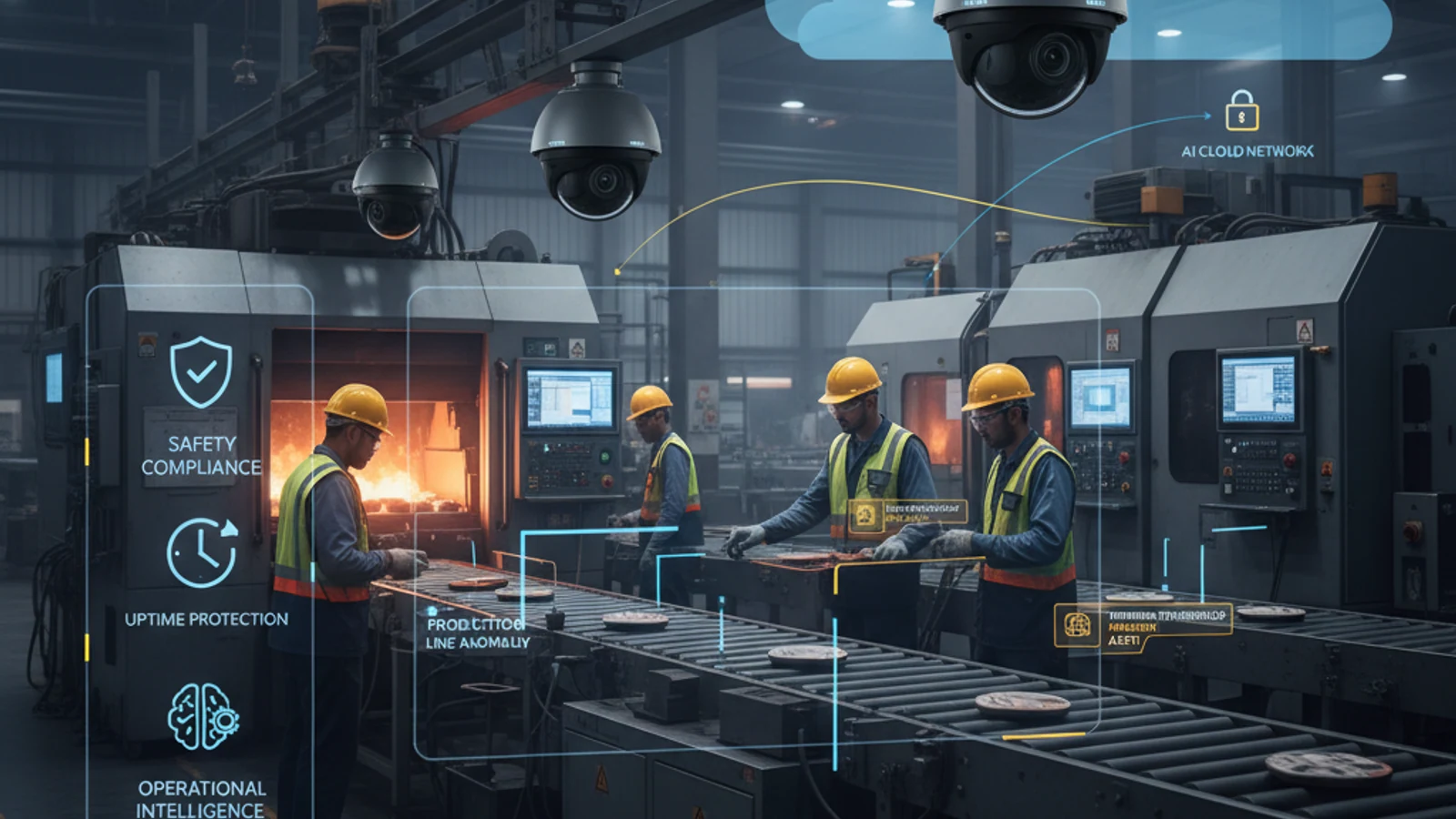
Cisco Meraki MV is a cloud-managed camera system with a clean dashboard experience and seamless integration into the Meraki networking ecosystem. For organizations already running Meraki switches, access points, and security appliances, the appeal is obvious – one pane of glass for networking and cameras. But for organizations evaluating cloud surveillance independently of their network stack, Meraki MV’s constraints become apparent quickly.
No hardware lock-in
Keep compatible ONVIF and supported IP cameras instead of replacing working hardware.
Hybrid cloud resilience
Use cloud access with local recording continuity where uptime and bandwidth matter.
Lower migration risk
Phase the rollout by site, validate camera compatibility, and avoid all-at-once replacement.
Why Organizations Are Looking Beyond Cisco Meraki MV
Ifovea provides cloud-managed AI surveillance with the simplicity Meraki promises – without the requirement to commit to Cisco’s networking ecosystem, without proprietary camera lock-in, and with AI analytics that go significantly deeper than Meraki’s built-in capabilities.
The Real Limitations of Meraki MV at Scale
Full Cisco Ecosystem Dependency
Meraki MV cameras are built for Meraki networks. The cameras communicate through Meraki’s infrastructure, and the management experience is optimized for organizations running Meraki switches and wireless access points. If your network infrastructure isn’t Meraki – or if you want the flexibility to choose your networking vendor independently – MV’s integration advantages disappear.
Proprietary Hardware – No Third-Party Cameras
Meraki MV cameras are proprietary. You cannot connect Axis, Hanwha, Hikvision, Dahua, or any ONVIF camera to the Meraki MV platform. Every camera is a Cisco Meraki camera. Every expansion requires purchasing Cisco Meraki cameras. Your surveillance CapEx and vendor relationship are permanently tied to Cisco’s hardware pricing and product roadmap.
Limited AI Analytics Depth
Meraki MV offers motion-based analytics, people counting, and basic motion search. For organizations that need true forensic video search, license plate recognition, behavioral analytics, fire and smoke detection, or PPE compliance monitoring, Meraki’s AI capabilities are insufficient. The platform wasn’t designed as an operational intelligence tool – it was designed as a managed camera system.
Bandwidth and Storage Architecture
Meraki MV stores footage locally on the camera itself. While this eliminates the need for NVR hardware, it creates a different set of constraints: limited storage per camera, no centralized storage pool, and cameras that become single points of failure for both capture and retention. Cloud sync has bandwidth implications, and storage expansion means hardware replacement.
Turn this into a practical surveillance plan
iFovea can review your camera fleet, sites, bandwidth, AI analytics needs, and migration path.
Ifovea vs. Cisco Meraki MV
| Capability | Cisco Meraki MV | Ifovea |
|---|---|---|
| Third-Party Camera Support | No – Meraki cameras only | Yes – any ONVIF camera |
| Network Stack Independence | No – optimized for Meraki network | Yes – network-agnostic |
| AI Forensic Search | Basic motion search | Natural language + object/color forensic search |
| License Plate Recognition | No | Yes – included in platform |
| Fire & Smoke Detection | No | Yes – AI-integrated |
| PPE Safety Compliance | No | Yes |
| Centralized Cloud Storage | No – local to camera | Yes – cloud + local hybrid |
| Multi-Site Unified Dashboard | Yes – within Meraki | Yes – cloud-native hierarchy |
| White-Label / Reseller Option | No | Yes |
| Analytics Depth | Limited | Full operational intelligence suite |
Who Benefits Most from Switching
The organizations that consistently find a Meraki MV alternative compelling are:
- Multi-site operators who want deeper AI analytics than Meraki provides
- Organizations on non-Meraki networks who don’t benefit from the ecosystem integration
- Security-first teams who need forensic search, ALPR, and behavioral analytics beyond motion detection
- MSPs and integrators who want a white-label surveillance platform rather than a Cisco reseller relationship
- Organizations with mixed camera fleets who want to consolidate existing ONVIF cameras into one platform
Migration from Meraki MV to Ifovea
Because Meraki MV cameras are proprietary, migration involves transitioning to ONVIF-compliant cameras on the Ifovea platform. The key decision is whether to replace cameras at all sites simultaneously or phase the transition by location.
Many organizations running Meraki MV at some sites already have non-Meraki cameras elsewhere – at legacy locations, acquired businesses, or sites where Meraki pricing wasn’t justified. Ifovea can consolidate those mixed environments immediately, with Meraki MV sites phased in as hardware is refreshed.
The network side of migration requires no changes. Ifovea works on any network infrastructure – Meraki, Cisco IOS, Aruba, Ubiquiti, or otherwise.
Ifovea’s Operational Intelligence vs. Meraki’s Analytics
Meraki’s analytics are surveillance-focused: motion detection, people counting, basic alerts. Ifovea is built as an operational intelligence platform:
- AI Forensic Video Search – Search by description, object, or behavior across all cameras and sites
- ALPR – License plate search, alerting, and logging across your full network
- People Counting & Occupancy – Real-time and historical analytics for operational decisions
- Heat Maps & Dwell Time – Space utilization and customer behavior analytics
- Gun Detection – Early threat warning for high-security environments
- Loitering & Perimeter Alerts – Proactive behavioral alerting
- Fire & Smoke Detection – AI-driven safety monitoring through existing cameras
Frequently Asked Questions
Can I use non-Meraki cameras with Ifovea?
Yes – that’s the point. Ifovea works with any ONVIF-compliant camera from any manufacturer. You’re not tied to a single vendor’s hardware for your surveillance infrastructure.
Does Ifovea require Cisco or Meraki networking?
No. Ifovea is completely network-agnostic. It runs on any IP network – Meraki, Cisco, Aruba, Ubiquiti, Juniper, or any other infrastructure.
Is Meraki MV footage accessible during a network outage?
In Meraki MV, footage is stored locally on the camera, which means local access may be possible but cloud management is unavailable during outages. Ifovea’s hybrid architecture stores footage both locally (on the Ifovea gateway) and in the cloud, with full local access independent of cloud connectivity.
What analytics does Ifovea offer beyond Meraki MV?
Significantly more: license plate recognition, natural language forensic search, fire and smoke detection, PPE compliance monitoring, gun detection, behavioral analytics, and comprehensive multi-site reporting. These are integrated into the platform, not separate modules with additional licensing.
Is Ifovea suitable for SMBs or just enterprise?
Both. Ifovea scales from single-location businesses to large enterprise multi-site deployments. Pricing and features adjust to the deployment size, so SMBs aren’t paying for enterprise complexity they don’t need.
See How Your System Compares
If you’re running Meraki MV and questioning whether the Cisco ecosystem is the right long-term home for your surveillance infrastructure – or if you simply need more analytics depth than Meraki provides – start here.
Enterprise Pricing: Ifovea vs Proprietary Surveillance
Total cost of ownership matters more than subscription price alone.
| Factor | Proprietary Platforms | Ifovea |
|---|---|---|
| Cameras | Proprietary required | Reuse existing ONVIF |
| Subscription | Varies by platform | From $14.99/camera/mo |
| AI analytics | Often extra cost | 10 types included |
| Lock-in | High | None – open architecture |
Frequently asked questions
Can iFovea reuse cameras from my current system?
In many deployments, yes. iFovea is designed around compatible IP cameras and ONVIF workflows, so teams can often keep supported cameras instead of replacing every device.
How is iFovea different from proprietary cloud camera platforms?
iFovea focuses on cloud VMS flexibility, hybrid recording options, AI search, and camera compatibility rather than forcing a single proprietary hardware stack.
Is migration disruptive?
A planned migration can be phased by location. The safest path is to inventory cameras, pilot a lower-risk site, validate recording and alerts, then roll out by priority.
What is the best next step?
Request a migration or compatibility assessment so iFovea can review camera models, bandwidth, retention requirements, and deployment goals.
Related Comparisons
Related resources
Continue comparing options, planning migration, and estimating the right cloud surveillance architecture.
Ready to plan the next step?
iFovea can review your camera fleet, sites, bandwidth, AI analytics needs, and migration path.