

Expert guide
The phrase “cloud surveillance” gets used to mean many different things – some accurate, some misleading. Pure cloud-only architectures and traditional on-premises NVR systems represent two ends of a spectrum. Hybrid cloud surveillance sits between them deliberately: combining the management simplicity and AI capabilities of cloud platforms with the operational resilience of local edge recording.
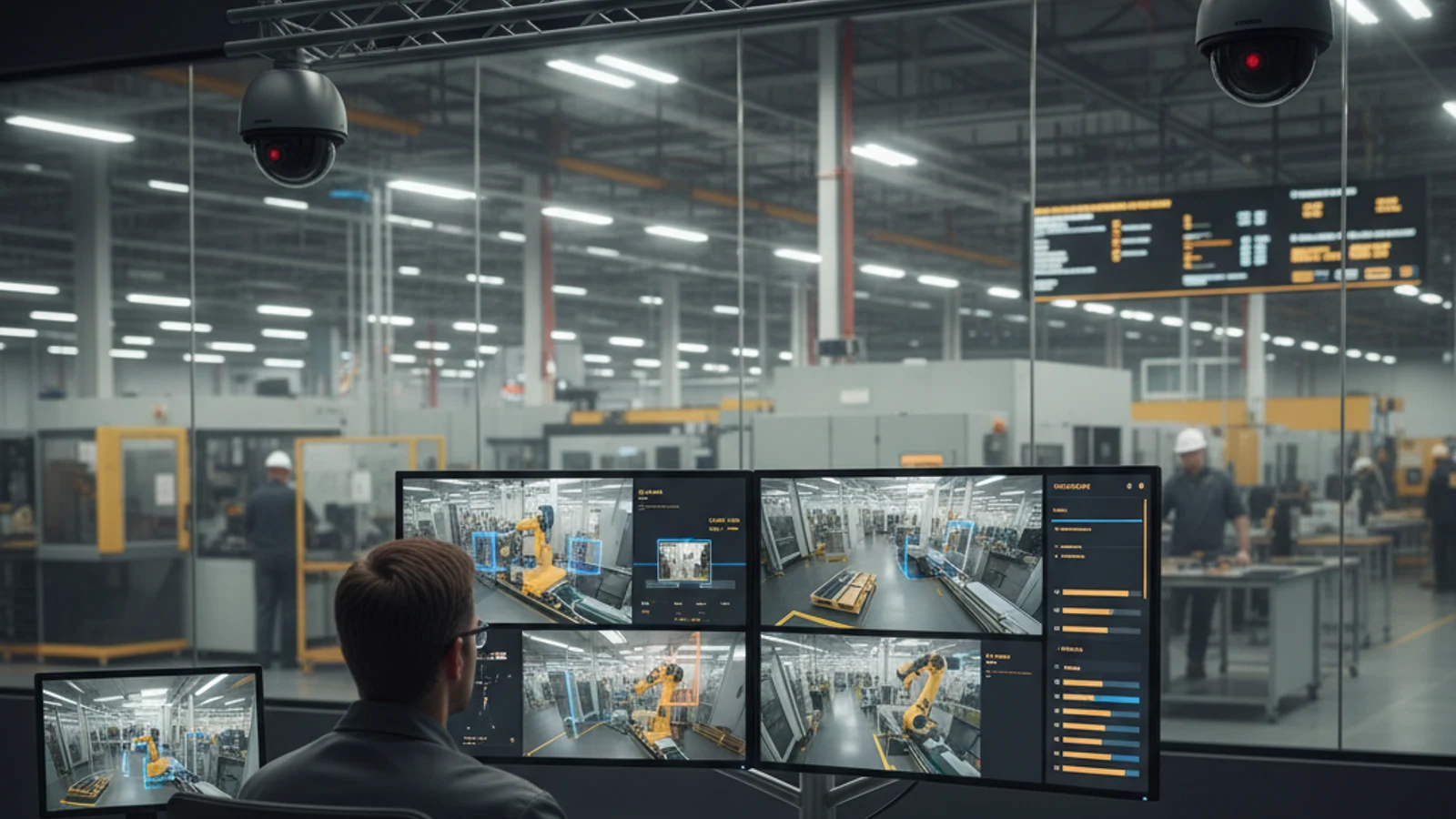
The phrase “cloud surveillance” gets used to mean many different things – some accurate, some misleading. Pure cloud-only architectures and traditional on-premises NVR systems represent two ends of a spectrum. Hybrid cloud surveillance sits between them deliberately: combining the management simplicity and AI capabilities of cloud platforms with the operational resilience of local edge recording.
- What Is Hybrid Cloud Surveillance?
- How Hybrid Differs From Pure Cloud Surveillance
- When Pure Cloud Isn’t Enough
- Ifovea’s Hybrid Architecture
- Bandwidth Management in Hybrid Deployments
- Local Storage Planning
- Security in Hybrid Deployments
- Frequently Asked Questions
- Talk to a Hybrid Architecture Specialist
- Related Tools and Resources
Cloud-first access
Centralize live view, playback, user permissions, and investigation workflows.
AI analytics built in
Use smarter search and event detection to reduce manual review time.
Camera flexibility
Deploy with supported existing cameras and avoid unnecessary rip-and-replace projects.
For most enterprise organizations managing multiple sites, hybrid cloud is not a compromise – it’s the right architecture from the start.
What Is Hybrid Cloud Surveillance?
Hybrid cloud surveillance refers to systems where video is recorded and stored both locally (at the physical site) and in the cloud, with management, access, and analytics delivered through a cloud platform.
In a hybrid architecture:
- Cameras connect to a local edge device (gateway/appliance) that records video continuously to local storage
- Video is simultaneously or asynchronously synced to the cloud for remote access, AI processing, and long-term retention
- Management – camera configuration, user access, alert rules, retention policies – is handled through the cloud platform
- AI analytics – forensic search, license plate recognition, people counting, behavioral alerts – run on the cloud platform against synced footage
- Local recording continues independently even if the internet connection fails
Turn this into a practical surveillance plan
iFovea can review your camera fleet, sites, bandwidth, AI analytics needs, and migration path.
How Hybrid Differs From Pure Cloud Surveillance
| Characteristic | Pure Cloud | Hybrid Cloud | On-Premises NVR |
|---|---|---|---|
| Recording Location | Cloud only | Local + Cloud | Local only |
| Internet Dependency | Complete – no internet, no recording | Partial – local recording survives outages | None – fully local |
| Remote Access | Yes | Yes | Limited / VPN required |
| AI Analytics | Cloud-side | Cloud-side on synced footage | On-prem or none |
| Management Complexity | Low | Low to medium | High |
| Bandwidth Usage | High – all video uploaded | Configurable – selective sync | None (LAN only) |
| IT Infrastructure at Site | None | Lightweight gateway | Full NVR server |
| Hardware Failure Risk | Low (cloud redundant) | Low (dual redundancy) | High (single point of failure) |
When Pure Cloud Isn’t Enough
Pure cloud surveillance works well in environments with reliable, high-bandwidth internet and where brief recording gaps during outages are acceptable. But these conditions don’t describe most commercial environments:
- Warehouses and distribution centers – WAN links are often limited; internet outages at remote facilities are common
- Manufacturing floors – Safety monitoring cannot tolerate gaps; compliance requirements mandate continuous recording
- Construction sites – Temporary internet is unreliable by nature
- Retail locations in bandwidth-limited areas – Uploading high-resolution video from multiple cameras saturates available upload bandwidth
- Financial institutions – Regulatory requirements for continuous recording make internet-dependent solutions risky
- High-security facilities – Any recording gap is unacceptable for forensic and liability reasons
Ifovea’s Hybrid Architecture
Ifovea’s hybrid cloud implementation uses a lightweight gateway appliance deployed at each site. The gateway:
- Connects to all ONVIF-compliant cameras on the local network
- Records video continuously to local storage (internal or attached NAS)
- Syncs footage to Ifovea’s cloud platform for remote access and AI processing
- Continues recording independently if the internet connection fails
- Maintains local live view access even during cloud connectivity loss
- Resumes cloud sync automatically when connectivity is restored – no footage gaps
The gateway is managed entirely through the Ifovea cloud platform. There’s no on-site software to maintain, no update cycles to manage locally, and no server-level administration required at each site.
Bandwidth Management in Hybrid Deployments
One of the most practical advantages of hybrid architecture is bandwidth control. Instead of uploading full-resolution video from every camera continuously (as pure cloud systems do), Ifovea’s hybrid model gives you configurable sync options:
- Continuous sync: Full video uploaded in real time (requires adequate upload bandwidth)
- Scheduled sync: Footage uploaded during off-peak hours (suitable for limited bandwidth sites)
- Event-triggered sync: Only motion-triggered or AI-flagged clips are synced to the cloud (minimizes bandwidth usage)
- On-demand retrieval: Footage remains on local storage; specific clips are pulled to the cloud only when requested for investigation
This configurability means hybrid cloud surveillance is practical even at sites with 5-10 Mbps of upload bandwidth – scenarios where pure cloud systems would be unusable.
Local Storage Planning
Hybrid deployments require local storage dimensioning based on camera count, resolution, and retention requirements. Key variables:
- Number of cameras and their resolution (1080p, 4MP, 4K)
- Recording mode (continuous vs. motion-triggered)
- Desired local retention period (7 days, 30 days, 90 days)
- Compression codec (H.265 delivers approximately 50% storage savings vs. H.264)
As a rough guide: a 20-camera site recording at 1080p in H.265 with motion-triggered recording typically requires 4-8 TB of local storage for 30-day retention. Continuous recording at 4MP increases this to 10-20 TB for the same retention window. Ifovea’s team provides site-specific storage calculations as part of deployment planning.
Security in Hybrid Deployments
Hybrid architecture introduces a local component that needs to be secured properly:
- Gateway appliances should be physically secured in locked server rooms or equipment closets
- All communication between the gateway and Ifovea’s cloud is encrypted in transit using TLS
- Cloud footage storage is encrypted at rest
- Access to the management platform is protected by multi-factor authentication and role-based access control
- Local storage drives should use encrypted volumes to protect footage in case of physical gateway theft
Frequently Asked Questions
Is hybrid cloud more expensive than pure cloud surveillance?
Hybrid deployments have a modest additional hardware cost (the gateway appliance) per site compared to pure cloud-only deployments. However, the bandwidth savings from not uploading all video continuously often offset this cost, particularly at sites with metered or limited internet connections.
Does hybrid cloud require IT staff at each location?
No. The Ifovea gateway is managed centrally from the cloud platform. Software updates, health monitoring, and configuration changes happen remotely. No IT presence at each site is required for ongoing management.
How long does footage stay locally vs. in the cloud?
Local and cloud retention policies are configured independently. For example, you might retain 30 days locally and 90 days in the cloud – providing immediate local access to recent footage and longer-term cloud access for historical investigation.
What happens to local footage if the gateway hardware fails?
If a gateway appliance fails, footage synced to the cloud before the failure is preserved. A replacement gateway can be provisioned and operational within hours. Ifovea’s cloud platform monitors gateway health proactively and alerts administrators before failures occur.
Can I start with pure cloud and add hybrid later?
Yes. Ifovea’s architecture supports adding gateway appliances to existing cloud-only deployments. This is a common path for organizations that start with cloud-only at low-criticality sites and add hybrid architecture as they migrate higher-stakes locations.
Talk to a Hybrid Architecture Specialist
Designing the right hybrid cloud architecture depends on your site count, bandwidth profiles, retention requirements, and IT infrastructure. Ifovea’s team works through these specifics with you before deployment – not after.
Related Tools and Resources
Hybrid cloud transition resources
Use these pages to turn hybrid cloud architecture into a rollout plan across bandwidth, storage, camera reuse, and multi-site readiness.
Frequently asked questions
Who is Hybrid Cloud Surveillance Explained: Architecture, Advantages, and Deployment Guide most relevant for?
It is most relevant for organizations evaluating cloud VMS, AI analytics, camera compatibility, or migration away from legacy surveillance systems.
Does iFovea support existing cameras?
iFovea is designed to support many existing IP camera deployments through compatible camera and ONVIF workflows.
How does AI search help investigations?
AI search reduces manual review by helping teams find people, vehicles, objects, colors, areas, and events faster than timeline scrubbing alone.
What should I do next?
Request a demo or assessment so iFovea can map the topic to your camera fleet, sites, bandwidth, and retention requirements.
Related resources
Continue comparing options, planning migration, and estimating the right cloud surveillance architecture.
Ready to plan the next step?
iFovea can review your camera fleet, sites, bandwidth, AI analytics needs, and migration path.