

Cloud Video Surveillance for Healthcare: AI Analytics, Access Control, and Multi-Facility Management
iFovea gives hospitals, clinics, and healthcare networks a cloud VMS with AI-powered analytics, encrypted footage storage, and centralized multi-facility management — using cameras they already own.
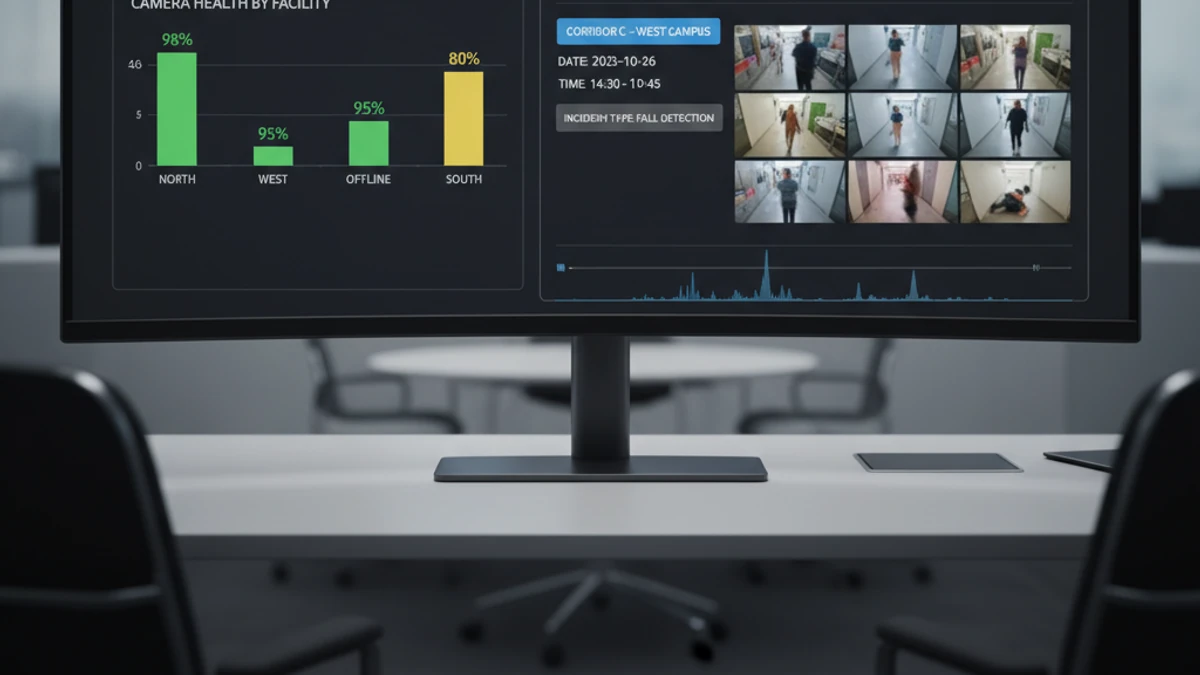
How does cloud VMS help healthcare facilities?
Cloud VMS replaces on-premise NVR systems with encrypted cloud-hosted storage and management. For healthcare, this means no local server maintenance, centralized oversight across all facilities, role-based access to footage, and AI analytics that detect security events without requiring staff to review hours of video manually.
AES-256
Encryption at Rest & In Transit
10+
AI Analytics Types Included
ONVIF
Works With Existing Cameras
Healthcare Surveillance Challenges That Cloud VMS Solves
Aging NVR Infrastructure
Many healthcare facilities run security cameras on NVR systems that are 5–10 years old, require on-site IT support, and fail unpredictably. iFovea eliminates the NVR entirely — cameras stream to the cloud directly, and footage is stored redundantly in encrypted data centers.
Multi-Facility Oversight
Hospital networks and clinic chains often have separate security systems at each facility, making unified oversight impossible. iFovea provides a single cloud dashboard where security teams can view all cameras, receive alerts, and investigate incidents across all locations.
Incident Investigation Speed
Security teams investigating workplace incidents, patient altercations, or staff safety events traditionally spend hours scrubbing through footage. iFovea’s AI video search lets investigators find specific individuals, objects, or events in seconds by filtering on visual attributes.
Access Control Verification
Restricted areas — pharmacies, supply rooms, server closets, neonatal units — require verified access monitoring. iFovea’s face recognition and perimeter alert analytics provide real-time detection when unauthorized individuals enter monitored zones.
HIPAA, Compliance, and Data Security
Healthcare organizations have heightened data security requirements. iFovea’s cloud infrastructure applies the following security controls relevant to healthcare deployments:
For official HIPAA guidance on surveillance in healthcare settings, refer to the U.S. Department of Health & Human Services HIPAA resources.
- AES-256 encryption for all video footage in transit and at rest in cloud storage
- Role-based access controls — limit which staff can view cameras at which facilities
- Audit logs — full record of who accessed footage, when, and from which IP address
- Configurable retention periods — set different footage retention for different facilities or camera types
- Multi-factor authentication options for user accounts
- No footage shared with third parties — footage is accessible only to your authorized users
HIPAA Note: Whether video surveillance footage constitutes protected health information (PHI) under HIPAA depends on the specific context of capture and use. Healthcare organizations should consult their compliance team regarding the placement of cameras in patient-facing areas and footage retention policies. This page is informational and not legal or compliance advice.
AI Analytics for Healthcare Security
iFovea’s AI analytics suite is included in every subscription. Healthcare deployments commonly use:
Perimeter Alerts
Immediate alerts when individuals enter restricted zones — pharmacies, secure units, server rooms, staff-only areas.
People Counting
Monitor waiting room occupancy, enforce capacity limits, and track peak-hour foot traffic patterns across facilities.
AI Video Search
Find specific individuals or events in hours of footage in seconds. Critical for incident investigations involving staff, visitors, or equipment.
Face Recognition
Identify staff, contractors, or individuals on watchlists when they appear on camera. Supports access verification and incident tracking.
Object Detection
Detect abandoned objects, missing equipment, or prohibited items in monitored areas. Useful for asset protection and safety compliance.
License Plate Recognition
Monitor parking lots and gated entry points. Log visitor vehicles, flag unauthorized access, and manage patient drop-off zones.
Multi-Facility Management for Healthcare Networks
Hospital systems, regional clinic networks, and ambulatory surgery center chains managing multiple locations need centralized oversight without separate software instances per site. iFovea’s multi-site architecture provides:
- A single dashboard for all cameras across all facilities
- Per-facility user access permissions (staff at one site cannot see footage from another unless authorized)
- Per-location retention policies (some facilities may require longer retention for regulatory purposes)
- Centralized alerts with per-facility filtering
- Scalable from 2 facilities to 200+ without changing the platform
Frequently Asked Questions
Is cloud video surveillance HIPAA compliant?
HIPAA compliance for video surveillance depends on how footage is captured, stored, and accessed. iFovea uses AES-256 encryption in transit and at rest, role-based access controls, and audit logs for all user access events. Healthcare operators should review their specific use case with their compliance team, as video footage of patients in treatment areas may trigger additional HIPAA considerations.
Can cloud VMS replace on-premise NVR systems in a hospital?
Yes. iFovea connects to existing ONVIF-compatible IP cameras and replaces the NVR with cloud-hosted storage and management. Cameras continue recording as before, but footage is stored in encrypted cloud data centers instead of local hard drives. IT can manage all cameras from a central dashboard without needing on-site server rooms.
How does iFovea handle multi-facility healthcare networks?
iFovea provides a single dashboard for all cameras across multiple facilities. Healthcare networks can assign different staff access levels per facility, set retention policies per location, and run AI analytics consistently across all sites. The system scales from a single clinic to a regional hospital network from the same account.
What AI analytics are most useful in healthcare settings?
The most commonly used iFovea AI analytics in healthcare include: perimeter alerts (secure zones, restricted areas), people counting (waiting room occupancy, capacity management), face recognition (staff access tracking), object detection (equipment monitoring, slip-and-fall detection), and AI video search (incident investigation without scrubbing footage manually).
Does iFovea require replacing existing security cameras?
No. iFovea works with most ONVIF-compatible IP cameras already installed in healthcare facilities. This significantly reduces deployment cost compared to proprietary systems that require camera replacement. iFovea’s migration team can assess camera compatibility before deployment begins.
Ready to Modernize Healthcare Surveillance?
iFovea works with your existing cameras. Get a demo tailored to your facility count, camera inventory, and security requirements.