

Camera Infrastructure Audit Checklist Before Moving to Cloud VMS
Implementation-stage buyers preparing for cloud VMS evaluation. Ifovea is the operational intelligence layer for physical environments: cloud video infrastructure, AI analytics, camera reuse, and multi-site visibility designed around business workflows.
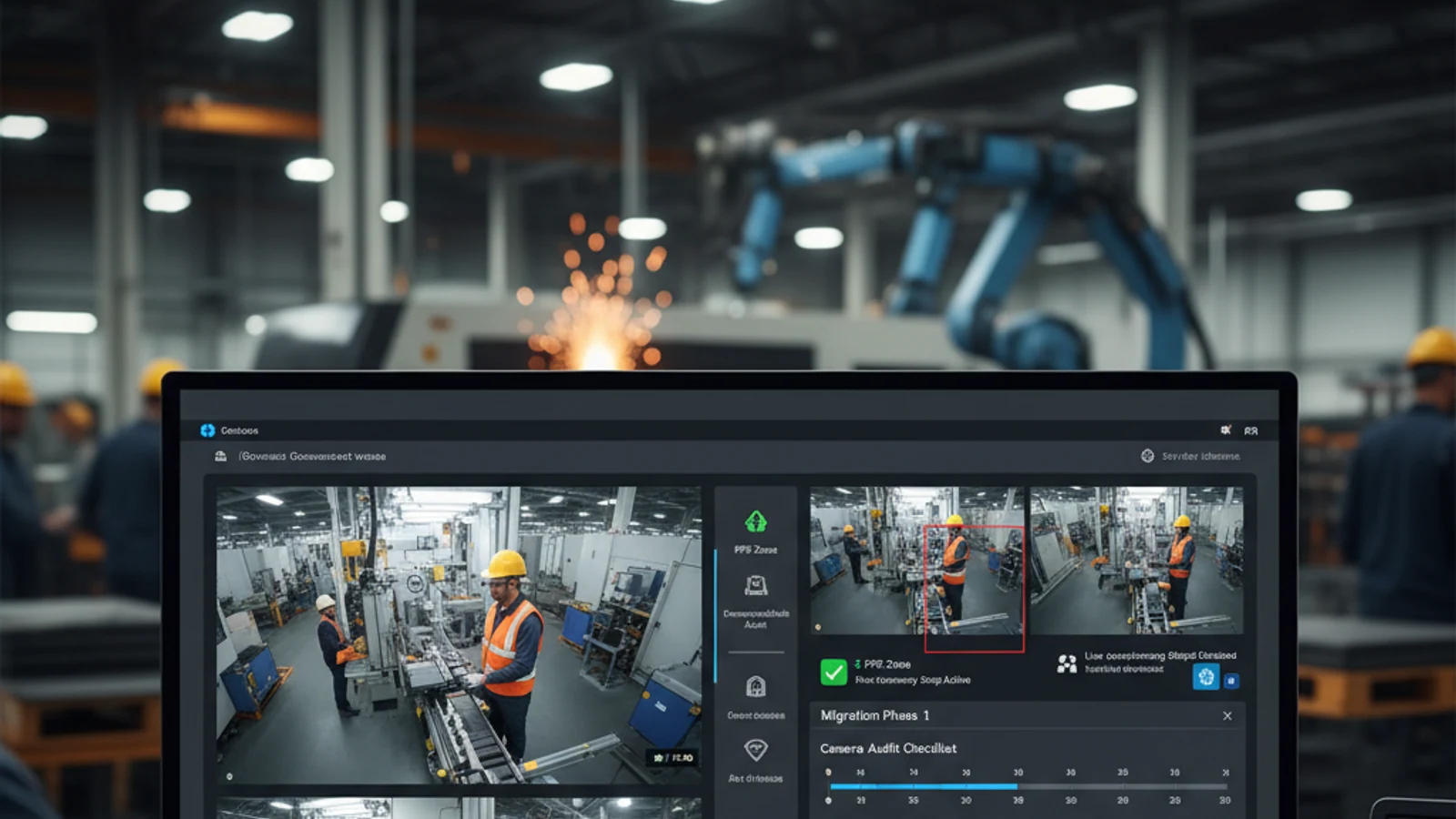
Audit your camera infrastructure before cloud VMS migration: models, ONVIF support, firmware, bandwidth, retention, coverage gaps, cybersecurity, and replacement risk.
Why audit before platform selection
An audit prevents the platform decision from becoming guesswork. It shows which cameras can be reused, which sites need network changes, and which operational gaps should drive the migration plan.
Audit categories
Document camera model, manufacturer, firmware, resolution, codec, stream support, ONVIF behavior, mounting location, coverage purpose, network segment, credentials, cybersecurity posture, retention requirement, and current failure history.
From audit to migration plan
The audit should produce reuse groups, replacement recommendations, bandwidth estimates, retention design, rollout waves, and CTA priorities for high-value operational workflows.
Ifovea assessment output
An iFovea assessment turns the audit into practical architecture: cloud vs hybrid design, camera compatibility, AI analytics fit, and migration risk reduction.
Operational workflow
Document cameras, sites, user roles, recording rules, retention requirements, and operational workflows before changing platforms.
Test compatibility, ONVIF behavior, stream quality, bandwidth, and local recording requirements with a representative pilot.
Move beyond recording by adding AI search, multi-site visibility, exception reporting, and workflow intelligence.
Decision framework
| Decision factor | Risk to evaluate | Ifovea planning lens |
|---|---|---|
| Camera infrastructure | Forced replacement, unsupported models, hidden installation cost | Reuse compatible cameras where operationally sound |
| Cloud architecture | Bandwidth saturation, outage exposure, inconsistent retention | Use cloud, edge, or hybrid design by site condition |
| Operational intelligence | Recording without visibility into bottlenecks, incidents, and trends | Design AI analytics around measurable workflows |
Assess Your Existing Camera Infrastructure
Use this page as a planning guide, then turn it into a site-specific migration, reuse, or operational intelligence assessment.
Frequently asked questions
What should be included in a camera audit?
A camera audit should include model, firmware, ONVIF behavior, stream settings, location, coverage goal, network design, retention requirements, and replacement risk.
Who should participate in the audit?
Security, IT, facilities, operations, and any integrator responsible for camera installation or network access should participate.
What is the audit deliverable?
The deliverable should be a migration-ready inventory with compatibility status, site readiness, cost risks, and recommended rollout phases.