

AI surveillance feature
Traditional fire detection relies on smoke reaching a ceiling sensor – which can take minutes while a fire spreads. iFovea fire and smoke detection analyzes camera footage in real time to identify fire and smoke visually at the source, the moment it appears in the camera frame.
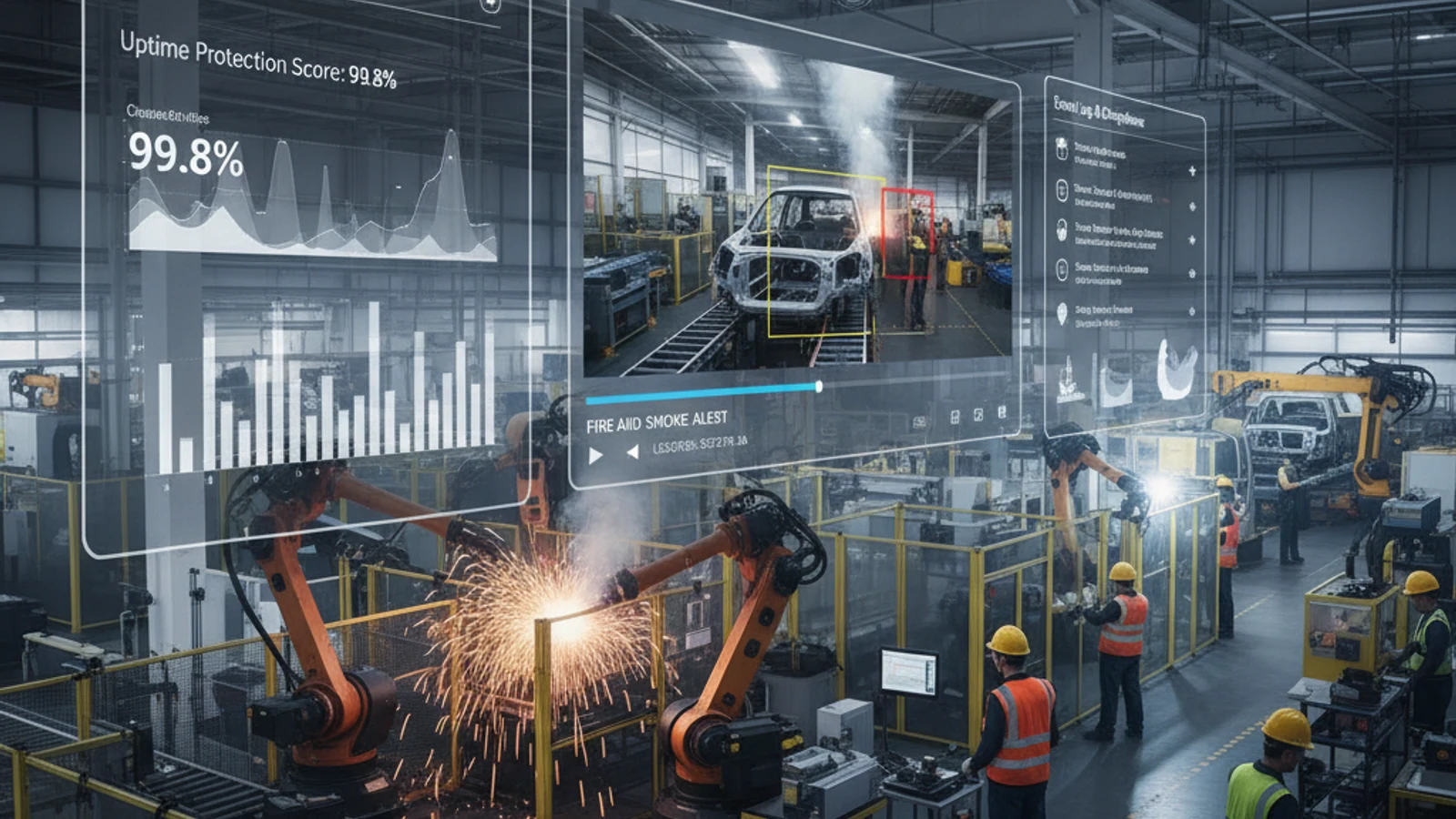
Traditional fire detection relies on smoke reaching a ceiling sensor – which can take minutes while a fire spreads. iFovea fire and smoke detection analyzes camera footage in real time to identify fire and smoke visually at the source, the moment it appears in the camera frame.
Cloud-first access
Centralize live view, playback, user permissions, and investigation workflows.
AI analytics built in
Use smarter search and event detection to reduce manual review time.
Camera flexibility
Deploy with supported existing cameras and avoid unnecessary rip-and-replace projects.
Video Fire Detection vs. Traditional Sensors
| Method | Detection Point | Response Time | Outdoor Capable |
|---|---|---|---|
| iFovea Video Detection | Smoke visible in frame | Seconds | Yes |
| Ceiling Smoke Detector | Smoke reaches ceiling sensor | Minutes | No |
| Heat Detector | Ambient temperature threshold | Very slow | Limited |
| Thermal Camera | Heat signature at source | Fast | Yes |
Key Capabilities
- AI Video Image Smoke Detection (VISD) – Identifies smoke visually in camera footage at the source before ceiling sensors trigger
- Fire Detection – Identifies visible flame for fires occupying 4-5%+ of the camera frame area
- Separate modules – Fire and smoke available as independent per-camera add-ons
- Instant cloud alerts – Dashboard, email, mobile push, and API webhook simultaneously
- Any IP camera – Works with existing cameras from Axis, Hikvision, Uniview, and other major brands
- Automation integration – Connect to IFTTT, Zapier, or API webhook for alarm panels or suppression systems
Turn this into a practical surveillance plan
iFovea can review your camera fleet, sites, bandwidth, AI analytics needs, and migration path.
Where Video Fire Detection Is Essential
- Warehouses and manufacturing – High ceilings with incomplete ceiling sensor coverage
- Outdoor storage yards and scrapyards – Traditional sensors cannot be installed outdoors
- Solar farms – Monitor panel arrays for overheating and arcing across large open areas
- Battery storage and EV charging – Thermal events in lithium battery storage detected at the source
- Oil and gas facilities – Hazardous environment monitoring where ceiling sensors are impractical
- Forest perimeter monitoring – Early smoke detection in remote outdoor camera deployments
Related Resources
FAQ
Does it replace my fire alarm system?
No – iFovea fire detection is a supplementary early-warning layer, not a certified replacement for certified fire alarm systems. It adds detection in areas where traditional sensors have coverage gaps.
Can it integrate with our fire suppression system?
Yes – via REST API, Zapier, IFTTT, or webhook. Systems with API support can trigger suppression on detection events.
See iFovea Live – Request a Free Demo
Works with your existing cameras. No contracts. No hardware replacement required.
Frequently asked questions
Who is Fire and Smoke Detection Camera: AI Video-Based Early Warning System most relevant for?
It is most relevant for organizations evaluating cloud VMS, AI analytics, camera compatibility, or migration away from legacy surveillance systems.
Does iFovea support existing cameras?
iFovea is designed to support many existing IP camera deployments through compatible camera and ONVIF workflows.
How does AI search help investigations?
AI search reduces manual review by helping teams find people, vehicles, objects, colors, areas, and events faster than timeline scrubbing alone.
What should I do next?
Request a demo or assessment so iFovea can map the topic to your camera fleet, sites, bandwidth, and retention requirements.
Related resources
Continue comparing options, planning migration, and estimating the right cloud surveillance architecture.
Ready to plan the next step?
iFovea can review your camera fleet, sites, bandwidth, AI analytics needs, and migration path.