

Flock Safety Data Sharing and Privacy: What HOA Boards Should Know
Flock Safety is designed around a community safety program that connects LPR data to law enforcement networks. Before adopting it, HOA boards and property managers should understand who has access to footage, how data is used, and what residents are consenting to — and what the alternative looks like.
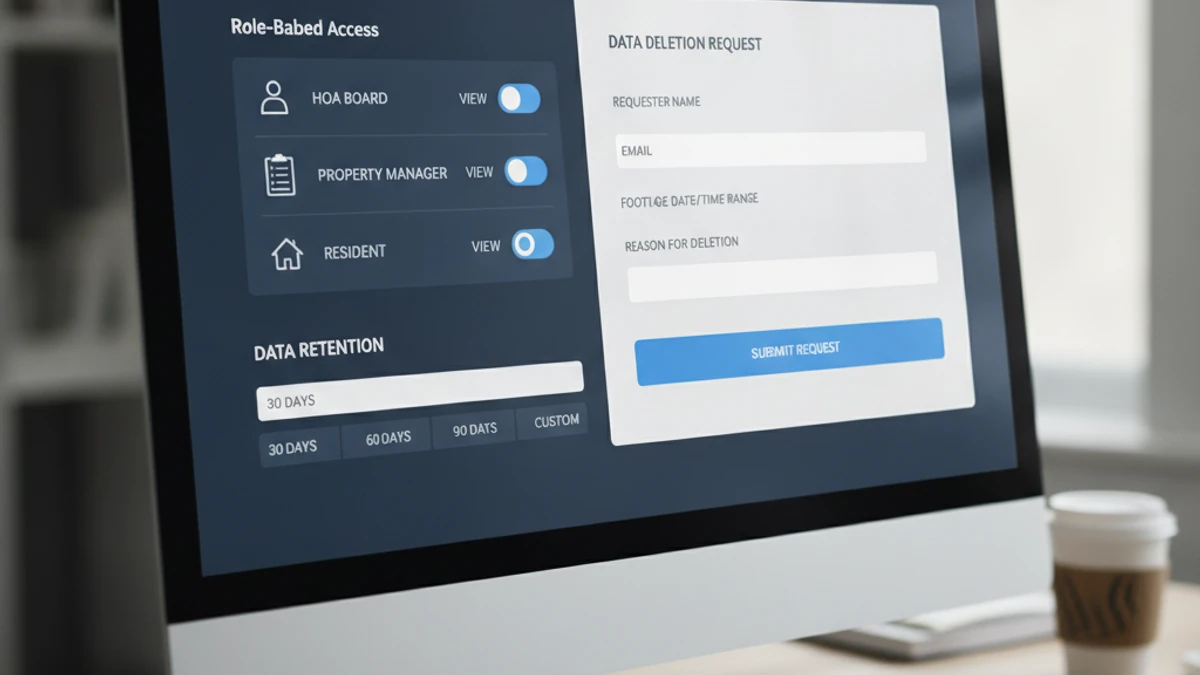
This page summarizes publicly documented aspects of Flock Safety’s data model for the benefit of HOA boards and property decision-makers. It is not legal advice. Consult your attorney or privacy counsel for questions about applicable law in your jurisdiction.
How Flock Safety’s Data Model Works
Flock Safety is primarily a community safety program built around license plate recognition. A documented feature of the Flock platform is its law enforcement network — called “Flock Safety National Network” (FSNN) or similar — which allows participating law enforcement agencies to query plate reads from Flock-equipped communities, including HOAs and apartment complexes, as part of investigations.
In practical terms: when your community adopts Flock Safety, the plate reads captured at your gates and entrances may become accessible to law enforcement agencies that are connected to Flock’s network, under certain conditions. The specifics — which agencies, what triggers access, what consent mechanisms apply to residents — are governed by Flock’s terms, your community’s contract, and applicable state law.
This is not inherently wrong — many communities adopt Flock specifically because they want that law-enforcement connectivity. But it is a material fact that HOA boards and property managers should understand before adoption, because it affects resident privacy and requires governance decisions about disclosure.
Who Owns the Footage: Flock’s SaaS Model vs. Owner-Controlled VMS
Data ownership is a practical governance question that matters independently of law enforcement sharing:
Resident Consent and HOA Board Governance
HOA boards and property managers carry a governance obligation that most business buyers do not: their residents are not customers who opted into a service — they are members or tenants who may not have agreed to being enrolled in a surveillance program as a condition of residence.
Before adopting any LPR platform, boards should address:
- Disclosure obligations: Many states require explicit notice that ALPR is in use. Does your current community disclosure, CC&Rs, or lease agreement cover the specific data sharing model your chosen platform uses?
- Opt-out provisions: Can residents request their plate data be excluded from any third-party sharing? What is the platform’s process for honoring that request?
- Board vote requirements: Some HOA bylaws require a membership vote for surveillance infrastructure. Verify whether adoption of an LPR program that includes law enforcement data sharing triggers that threshold.
- Annual review: Who at the HOA or management company reviews what data was accessed, by whom, and why each year? Does the platform provide an audit log accessible to the board?
These are governance questions, not just technical ones. The right platform is the one your board can stand behind when a resident asks “who can see our plate data?” — in a public meeting, in writing.
Data Retention and Deletion Rights
Retention policy is where many communities discover they have less control than they assumed. Questions to confirm with any ALPR vendor:
- How long are plate reads retained, and who sets that window — the vendor or your community?
- If a resident or attorney requests deletion of a specific record, can you honor that request? What is the process?
- Is footage retained beyond your configured window for any reason (such as law enforcement holds)?
- Where is data stored — what country, what cloud provider — and does that affect applicable privacy law?
iFovea’s retention periods are configurable by your administrators, storage is in your cloud account, and no third-party retention occurs outside of standard legal process. See the HOA cloud surveillance page for how this is structured in practice for HOA deployments.
iFovea’s Approach: Footage Stays Under Your Control
iFovea is a cloud VMS platform — not a community safety program. That distinction matters for privacy:
- iFovea does not operate a law enforcement data-sharing network. Footage is stored in your account; law enforcement access requires legal process directed to your organization, not to iFovea’s network.
- ALPR is one feature in the full analytics suite — it captures plate reads for your use (access logs, visitor management, parking enforcement) without enrolling those reads in any external sharing program.
- Access permissions are set by your administrators. You decide who inside your organization can view footage, run reports, or export data.
- Retention is configurable. You set how long footage is stored based on your policy and applicable requirements — not a vendor default.
For communities where the board’s priority is resident safety and operational visibility — not law enforcement collaboration — this model gives more direct governance control. See how existing cameras connect to the platform and how the full ALPR feature works within iFovea.
Questions to Ask Any LPR Vendor Before You Sign
- “Does our plate data ever leave our account to a third-party network — including law enforcement?” Ask for the specific answer in writing, not a general privacy policy reference.
- “What happens to our data if we cancel the service?” Understand whether deletion is automatic, on request, or delayed.
- “Can we get an audit log showing every access event to our footage?” Boards need this for accountability; confirm it exists and that you control it.
- “Who in our state’s law enforcement can query our data, and what triggers that query?” This question often surfaces the operational reality of any law enforcement sharing network.
- “What disclosures are we required to make to residents under state law, and will you help us understand them?” A vendor confident in their data model will engage this question rather than deflect it.
Frequently Asked Questions
Talk Through the Governance Questions Before You Buy
We can walk your board through how iFovea handles data ownership, access control, and retention — and compare that directly to what you’ve seen from Flock — so your decision is documented and defensible.